
A Beautiful Agony
Remembering Drigo The Culinary Alchemist in a time when it’s hard to stay alive

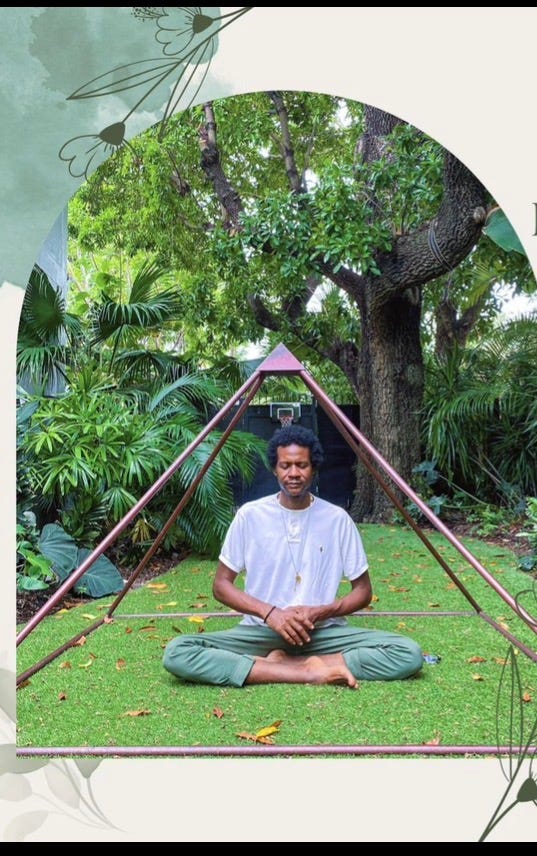
First, the sound of drumming.
Then we danced, Lamoy and I.
The blood flowed,
my hips swayed.
This was holy ground.
Drigo.
Is.
Dead.
I had had a long day. I taught a few classes, stayed for office hours, and drove an hour south back to Miami to attend what Jamaicans call “nigh night,” “nine night,” or “the setup.” It had only been a few days since Soap Man told me the news on what was supposed to be a blissful Saturday at the farmers market. I hadn’t even gotten my weekly sugarcane passion fruit fix from Missah Clive, before the words, “Drigo died,” seeped all the sugar from the day.
Those words–”Drigo died” had no place to land. It felt more like a sound– a guttural, aching sound, sticking to the cold Miami wind, following me into the shower, into every classroom, into every tedious task, and finally on that long drive south.
The sound “Drigo died” sent out a vibration into the world that was as much familiar as it was unfamiliar–strange and bewildering, grounding and unyielding.
But it made as much sense as everything else did. How long can the body sustain inhumanity? The constant onslaught of news about bodies being separated, bodies being deported, bodies being killed. How long can the body follow the hum of routine as homeless bodies fill the streets, as dignity and goodness dissolves? Living in this contradiction can kill you. I wonder if it killed Drigo.
It was a Wednesday night. I heard the drumming from across the street. I had been to Drigo’s house before, but never inside. I picked him up several times and had stopped by to pick up the moringa pods and curry leaves he grew in his yard. But this was a different visit.
Oh, the drumming. Once it entered my body, I was soothed and energized. Inside the small, sweet incense filled space was Drigo’s wife sitting on the staircase. I hadn’t seen her in years, but when our chests joined, and our arms folded around each other’s backs, I felt like a tree lifting up.
Two elder drummers played as a small group sat on the ground. I brought a purple candle as an offering to the ancestral altar where there were tiny bananas among other fruits and other lit candles. Lamoy, a pioneer in Miami’s Caribbean plant-based culture, was there. Lamoy was a leader in the space long before Miami’s vegan food culture became mainstream. I met her when she sold her ambrosial, raw plantain lasagna and other divine offerings at the hospital farmers market near Overtown.
I hadn’t seen her in years, but there we were together on this island of sorrow and ceremony and when she reached for my arms to dance, my hips followed her as if they had been longing for this moment. The tiredness, the weariness that gripped my body from grief, my monthly cycle and the long drive south, vanished.
First, the sound of drumming.
Then we danced, Lamoy and I.
The blood flowed,
my hips swayed.
This was holy ground.
I closed my eyes as my body moved. I was levitating. The ancestors were with us. Drigo was with us.
In Jamaica, nigh night is a sacred ceremony, a physical way of escorting a loved one to the ancestral line through music and dancing and food and whatever happens in the moment. Throughout the Caribbean, there are similar ceremonies. Drigo, whose name is Roderick Richardson, comes from a rich Caribbean heritage, his mother having been born in St. Vincent, his father coming from Aruba. They met in The Virgin Islands where he was born.
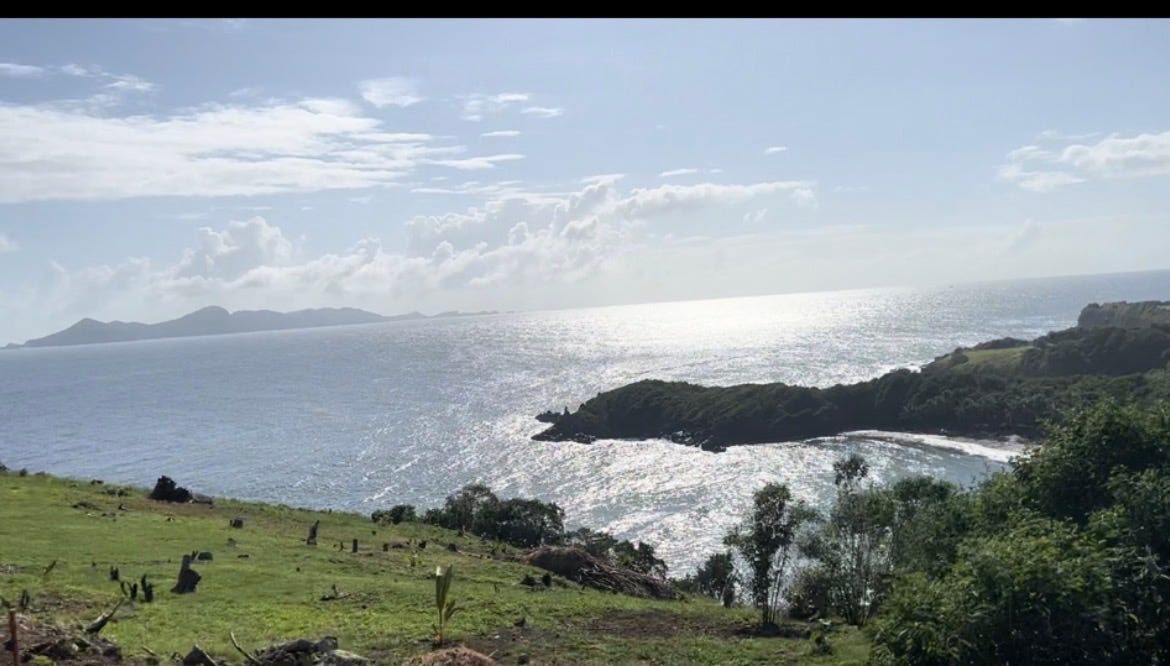
A half a century and one year later, we gathered, as generations of black people had done before us, to honor a new ancestor. There, we gathered in that gentrified neighborhood where jagged roads betrayed the gutted then gilded homes that were inaccessible to Miami’s working class. Drigo and I walked through these streets contemplating our lives as black artists longing for more freedom, a freedom that felt like bare feet climbing on trees and wandering through lands that grow wild in unfilled memories. His yearning for freedom was palpable. I saw it in him because I saw it in myself. Time freedom, location freedom, financial freedom. Giving up his ghost so abruptly felt like an urgent leap into that freedom.
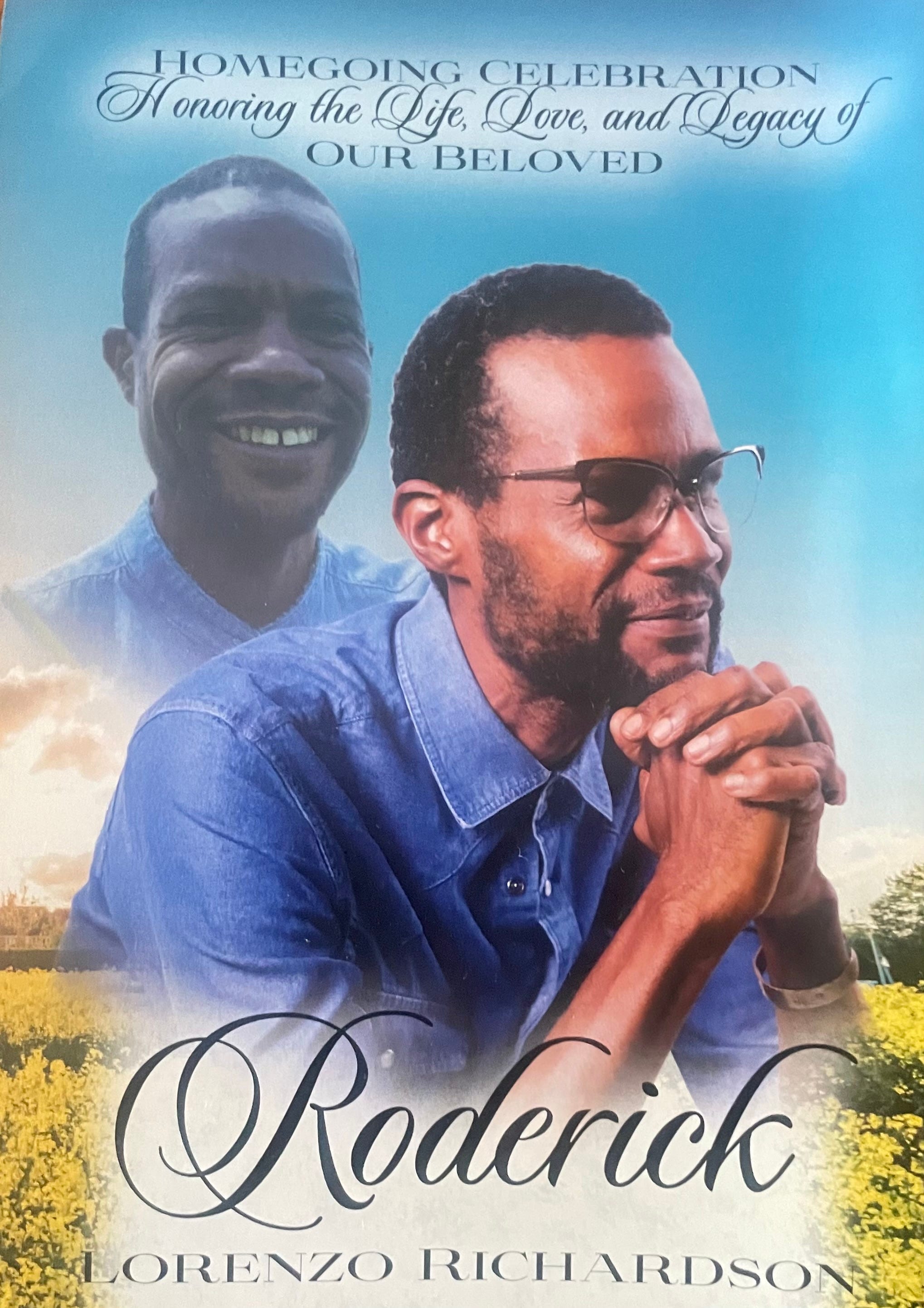
We talked several times about the book he wanted me to help him write. It would be full of recipes, passages about his sojourns all over the Caribbean, London, and beyond. Drigo was a creative soul, a masterful chef in the Caribbean plant-based world. He kissed coconuts and knew how to transform banana blossoms into beautiful stews. He did “extensive research about the history of spices and the chemical properties of food that attracts the body to certain smells and tastes.” To Drigo, plants were family, and even if you were the most stalwart carnivore, when you were around him, you felt his passion the way people feel the spirit when they go to church.
Black people gathering is not just how we survive, it’s how we fuel. Death rituals are a recalling, a remembering, and a reconnecting to only what the body knows and remembers and so that Wednesday night when the other visitors could not connect, their movements discorded and strained, their hips stiff and out of tune, it did not surprise me.
This was holy ground and a space that could not be gentrified.
As word spread about Drigo’s death and its cause, what struck me was this phrase: chronic stress. Black men, Drigo’s friends who worked in the arts and holistic food culture, shared that in their last conversations with him, he shared that he was battling chronic stress. One shared that Drigo wanted to buy a house. Another shared a text where it was clear that he needed clients to generate income.
Drigo’s death symbolized a larger conversation about how we take care of our teachers, our philosophers, our healers, and our artists who give and give until depletion. The government has made its position clear, so what do we do?
Two years before Drigo’s death, I invited him to be a part of a cover story celebrating black holistic health leaders in South Florida. At the time, I was the Editor-In-Chief of MIA Media’s Group Legacy publications. Traditionally, the publication had a strict formula for its healthcare issue that featured physicians and pharmaceutical professionals in conventional, Westernized, medicine. But the reality is statistically, black bodies are not thriving in this system of care, and I thought it was critical to celebrate the herbalists and healers and the holistic health professionals who have been taking care of our community.
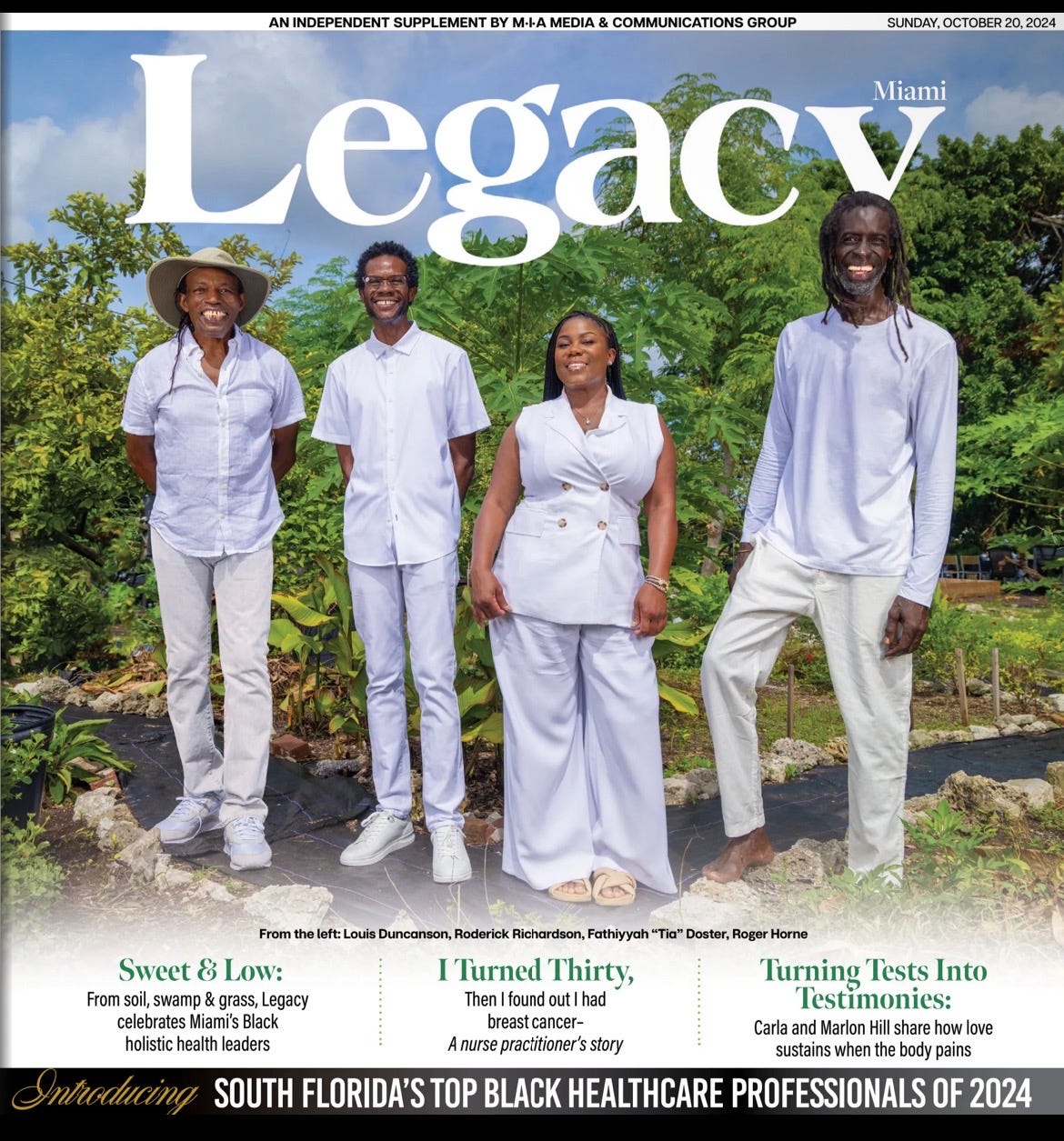
Drigo was difficult to work with. He wanted me to keep changing the photo shoot date and time. He questioned the aesthetics of the photo shoot. He didn’t want to work with the writer I chose to write the story. He was irritated when I asked him followup questions. Drigo was exhausting. But he was insistent that we shoot at Ceresare Farm in Liberty City, an urban farm that had been operated and managed by a black farmer, Roger Horne, for almost twenty years.
He was right about that.
When Drigo arrived at the photo shoot, he was hours late, and we were wrapping up the shoot. I was very frustrated, but when I saw him with Baba, an elder in the holistic health space, I picked up my phone and recorded. After his death, the video felt prophetic. The photographer captured the essence of what would be one of the only remaining pieces of content featuring Drigo on Instagram. In December, a month before he died, Instagram removed Drigo The Culinary Alchemist’s IG page. He had over 20 thousand followers.
In Drigo’s words that were featured in the article:
“We’re living in a society where there’s sustainable solutions for almost everything that is creating and contributing to chronic illness diseases. The reach of his alchemy has impacted everyone from intensive care unit patients to people recovering from strokes. There’s a wealth of knowledge about local wild edibles and plants that the original migrants likely planted in Miami. But now, three generations later, people have lost the understanding of how these plants can be used to heal.”
In January 2023, Drigo was texting from St. Vincent. He was helping at a cousin’s restaurant. He shared pictures. He was so happy. I was in Tulum about to go to Jamaica and had been thinking about a piece about mangoes that would later run in Saveur online for Mother’s Day:
Drigo: Did you ever write the article?
Me: Which one?
Drigo: About the sensual aspects of mango
Me: I am working on some thing and I’m glad that you reminded me about the mango and the element of sensuality…
Drigo: You got crazy talent Dink put it out share it stop holding back
It’s great to hear and see that you have taken Drigo‘s urge to heart and are indeed pushing the work out— the creative work you were put here to do.
Drigo was absolutely correct about you. May his memory be a blessing.