
The Phantom Self
Surviving and creating in the American experiment

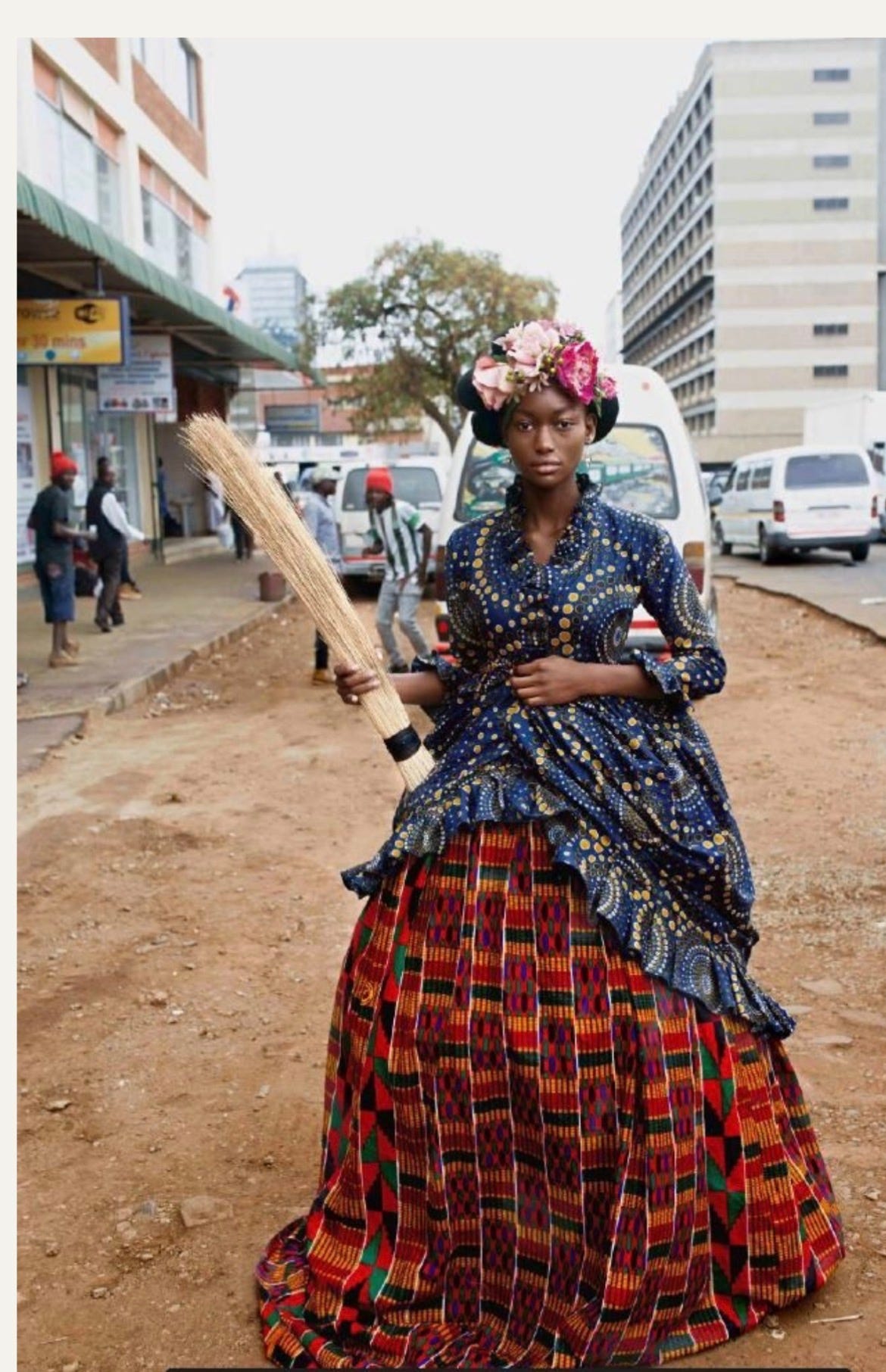
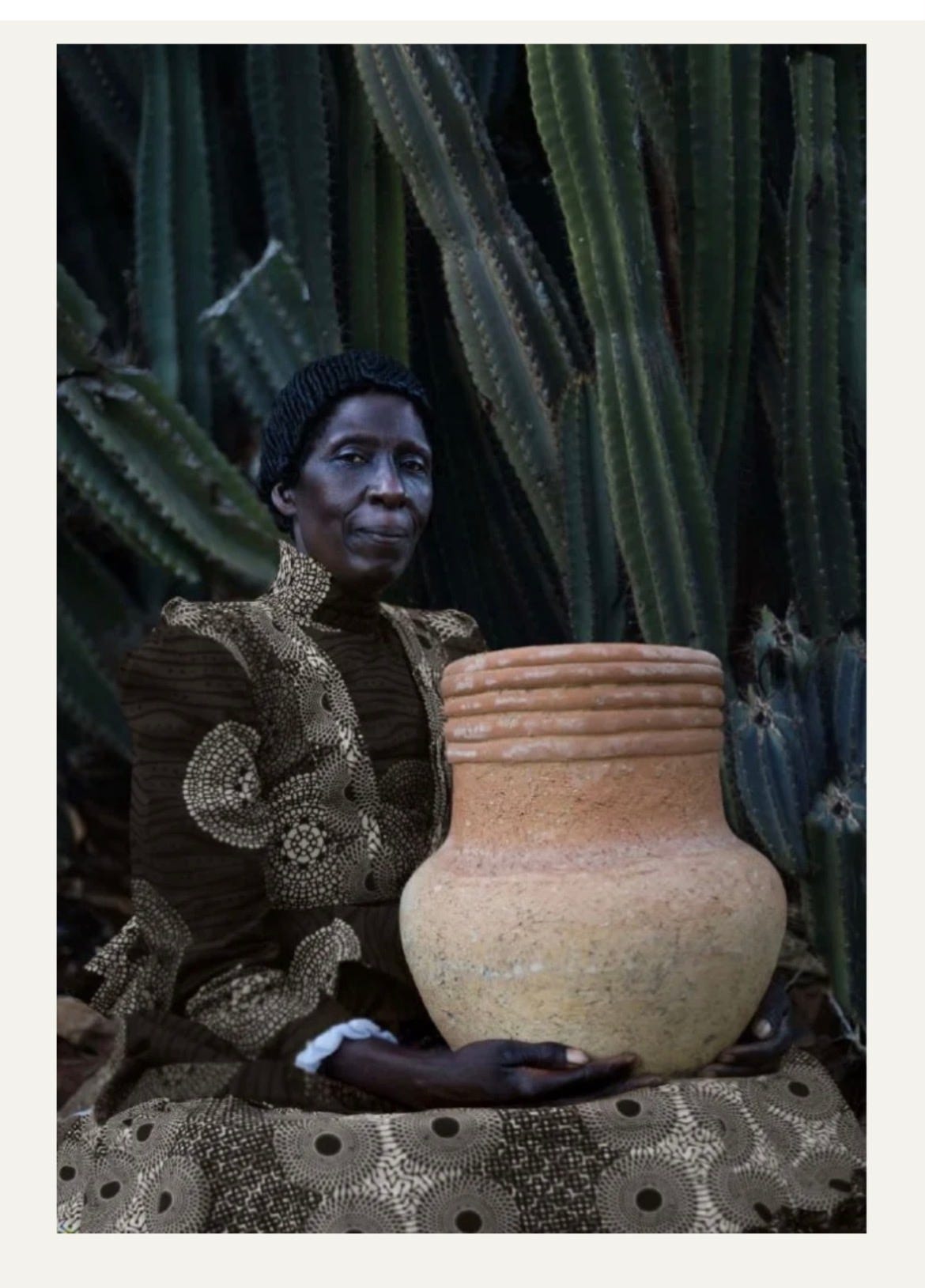
“A phantom self was moving around doing what needed to be done on the farm, while the rest of her was in Georgia, sitting with her children in front of the fire, telling them stories...She just needed to get the rest of her body there. Over that big swath of land and that big body of water.”
“Night Wherever We Go”
Tracey Rose Peyton
I
For many, this is what it means to live in America. Most of us are trying to make a living doing what we don’t want to do or doing what we want to do but in the prison of oppressive structural systems where your dignity is desecrated daily.
The desecration ritual: You show up (on time). By bus, by train, by car, by someone else’s car. But you show up (on time). Oh, that clock. That miserable clock. You wanna cut off its hands, rip the numbers off the screen. You smile (no matter what happened last night). Documented, undocumented, naturalized, branded, you smile. You move from task to task. Task to task. Task to task. It’s a horrible dance, but you’ve found your rhythm in it. You smile. Titles, no titles, you smile. Freelancer or staff, you smile. Broom or bucket, you smile. Briefcase or messenger bag, you smile. Someone else is measuring your value on that smile. That smile makes everyone else feel at ease even though inside, you’re screaming. You’re paid to smile. Doesn’t say so in your contract. But, you know it. That smile is carved into your face with an invisible knife. Task to task. Task to task. Back on the bus, on the train, in the car, or someone else’ car. Home. The moon isn’t patient. Won’t hold off, so you can hold on to some of the day. There she is, nodding her head. That mean moon. Next day comes, then the next, then the next. You show up (on time). More tasks, more tasks, more tasks. Doctor says, “Slow down. You need more rest.” Then pay day. You pay the taskmasters. Nothing left to live. Keep smiling. Will need another job. And another. Repeat…
I borrowed the title of this essay and the quote above from Peyton’s first novel which is set in the mid-1800s in Texas. Like many of us, Junie, one of the protagonists, is at work, longing to be somewhere else.
Junie is a slave.
II
I didn’t like shopping at this wine boutique in Coral Gables. The owner wasn’t warm and friendly. As an othered person, in addition to the five senses I was born with, there is another sense. Invisible like the others, but indescribable with words. It is activated solely by the sharp, acute knowledge that I, an othered, am not welcomed.
The body just knows. Just like you know when a cold is coming or when the police officer is about to pull you over. You know it. You feel it. Everywhere.
But it was the time of Covid when the murders of George Floyd and Breonna Taylor rang the conscience of the racist food and wine industry. Online, there were loud declarations of reform. Illyanna Maisonet and Julia Coney were leading online revolutions. I led a revolution of my own. I was commissioned by Alice Feiring to research and write about Bordeaux’s legacy in the slave trade that contributed significantly to its wealth. In the article, I shared an incident that happened with a Bordeaux winemaker during VinExpo. I had been holding the incident in my body, but the phantom self was ready to push onto the page.
It felt like we were pushing forward as a global community. White folks in the industry were DMing me, asking me what they could do. It was a colossal question, one that spanned histories known and unknown.
A sales assistant, Lisa, who worked at this wine boutique in Coral Gables, reached out to offer me an Italian bottle she thought I would love. I hesitated but picked up a good vibe from her and went to meet her in person.
I felt Lisa’s nervousness, but she was lovely. A human who wanted to connect. She explained that while in college in New York, she took classes with black female professors who introduced her to black feminist studies. My work reminded her of those studies.
After that, I started shopping at the boutique. I still felt triggered by the white male owner’s forced interactions, but I smiled and nodded, but mostly focused on Lisa, who was protective of me. If she knew I was coming to the store, even if she wasn’t working, she’d pop up. We never spoke openly about her boss, but there was a psychic conversation happening between glances.
Lisa and I continued communicating from time to time but eventually lost touch. The high energy around making the food and wine industry more inclusive and more financially accessible to people of color also quickly burnt out.
An orphaned movement barely beyond its infancy, the world continued but with a face at the helm of a new era of open indecency in American politics. Votes were cast, but the venom could not be drawn back into the snake. Instead, it flowed. And everywhere, there was grief.
Joan Didion, an author whose grief work I deeply connected with, died just before the new year, 2022. I went to Barnes & Noble in Coral Gables in search of Didion’s “Slouching Towards Bethlehem.” But they sold out. Instead, I picked up James Baldwin’s “The Fire Next Time.” His face on the cover, a harrowing expression as he peered at a nation on fire, at the moral monsters, as he called them. Baldwin’s eyes were a live painting of what it meant to be black in America. In them, you saw every hanging, every bullet-holed body, every torn womb, every disemboweled dream, every raging phantom.
After I left Barnes & Noble, I walked into the wine boutique:
“Who is that?” the owner asked, as he looked at the book’s cover.
“Dizzie Gillespie?”
“James Baldwin,” I answered.
“What’s wrong with his eyes? I guess they didn’t have a cure for thyroid issues back then,” he said.
III
Change wasn’t coming. It was here. “Miami is dead,” a friend said. While the rest of the nation rattled with Covid unrest, Miami boomed. More and more New York license plates. New Jersey, California, Texas. Buildings rising everywhere like concrete trees. Prices, too.
It was New Year’s Eve. James Baldwin and I went to the Betsy Hotel. Collins Avenue was full of tourists, and then there were the others–the smilers, rushing for cars and pouring wines and serving croissants and greeting guests. I saw them. Miami boomed without them.
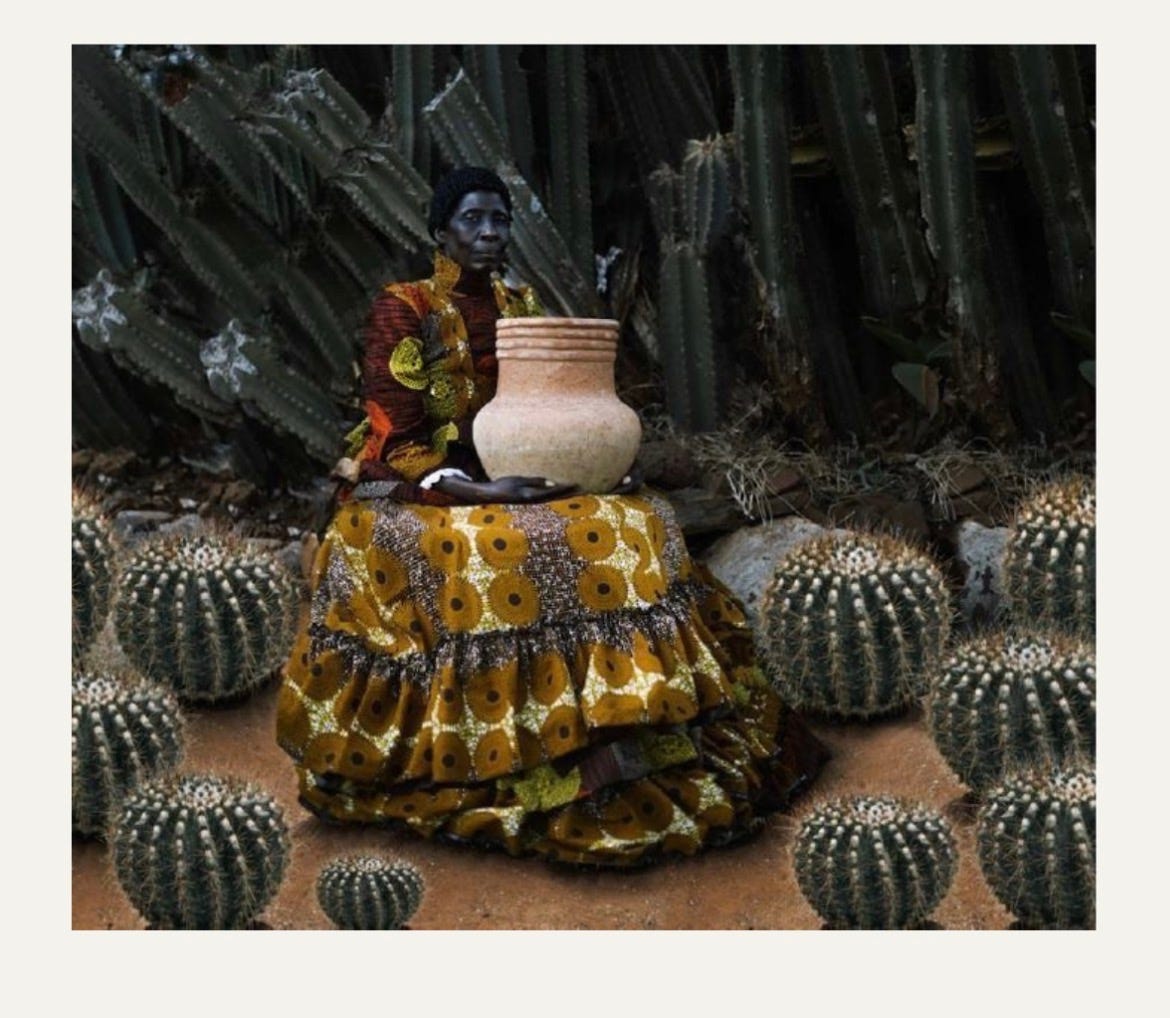
I walked into the hotel’s lobby and saw a dark-skinned woman wearing a magnificent gown and holding an enormous clay pot. She startled me. Her gaze was familiar–penetrating, disarming. I stood in front of her as if she wasn’t in a photograph, as if she was an elder who came to save me.
It wasn’t just her. There was a village of these women sitting in frames on The Betsy Hotel’s walls, staring back at me from these magnificent gowns, the backdrops varying from open fields to a town strip mall.
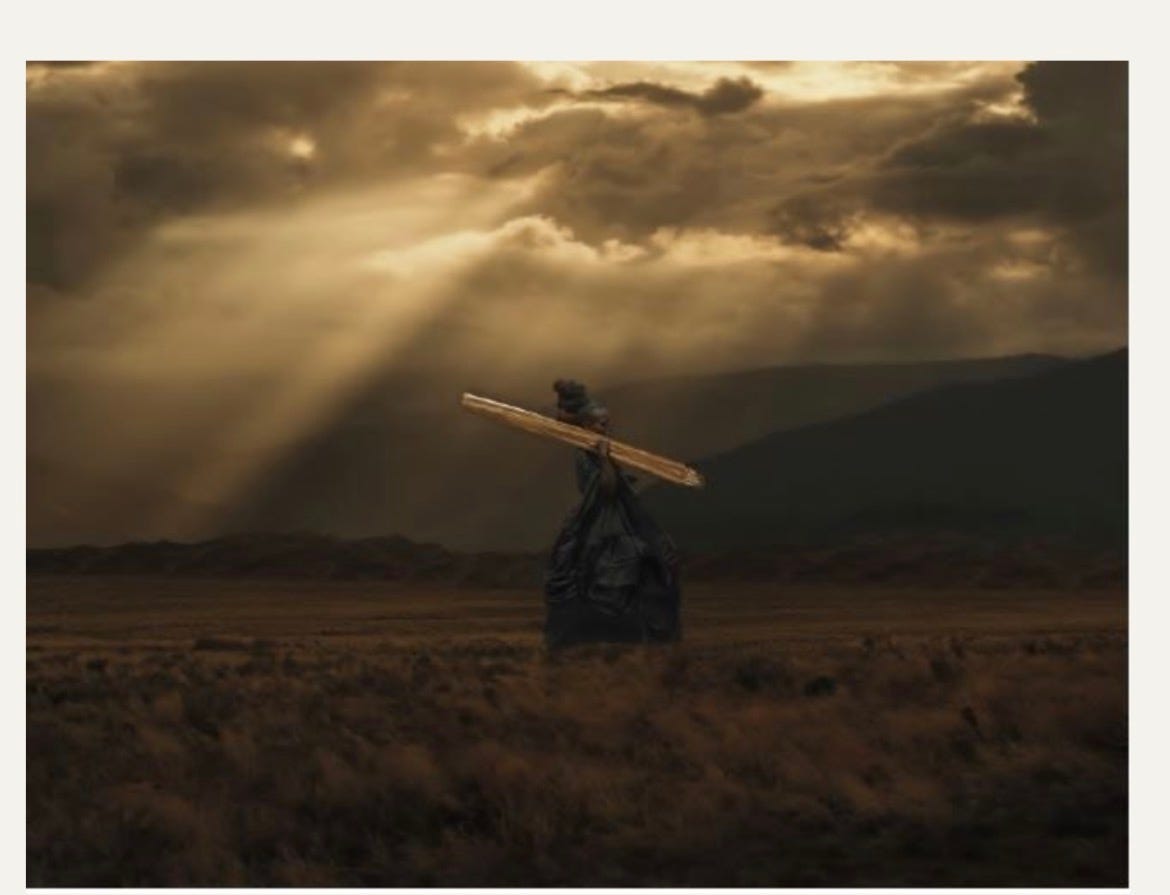
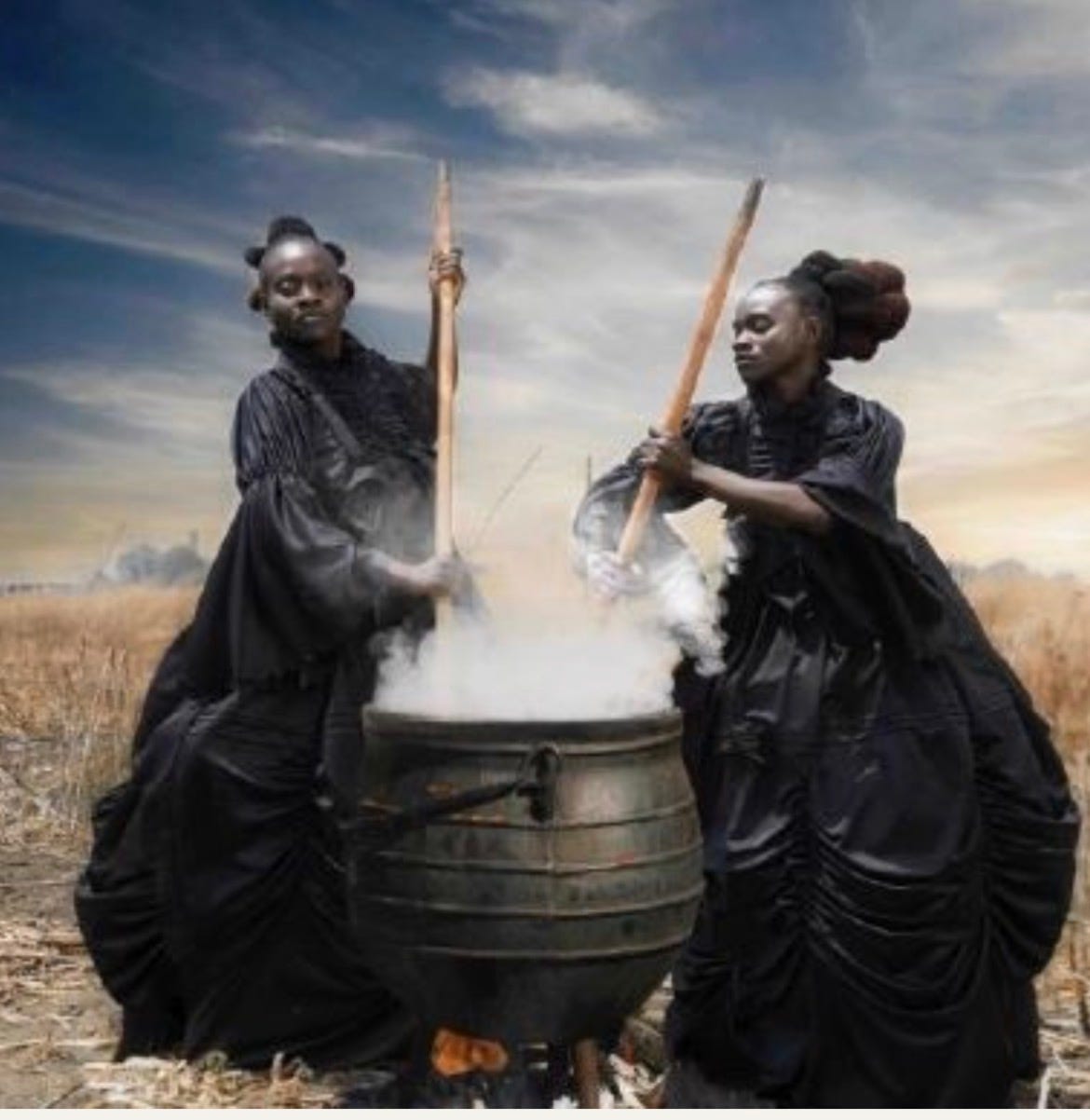
These gowns–the big Victorian skirts made with African fabric were more satirical than referential. It felt like a reclamation of space, as if these women, young and old, were phantoms come to life, oceans of massacred memories and rampant hope floating under their gowns.
“The artist wanted to create a euphemism on colonialism,” said a woman who was sitting on a coach directly underneath the portraits, eating with another woman.
I’m sure she said other things, but euphemism on colonialism strangled the air. Then her phone rang and while she spoke to the person on the phone, I continued to search the faces of these women. There was no euphemism. When the woman finished her conversation, she spoke to me again, her arms floating around theatrically.
“What do you mean by euphemism on colonialism?”
“The artist did not want her subjects to bemoan the interruption of their people but to own it,” she said in her English accent.
She proceeded to tell me what to see in these women, the phrases, bemoan the interruption and euphemism on colonialism, still strangling the air in the room.
“I don’t really need you to interpret the work for me. I’ll just…”
“I’m not interpreting the work for you. I’m the curator, and I’m just telling you what the artist’s vision is.”
“Well, it’s difficult for me to listen to a white woman describe the assault and rape of a people—the women, land, and resources as an interruption.”
“I’m just telling you…”
“Would it be okay if I just stood here and looked at the art?”
I felt and understand your offense at the curators interpretation of the work and the “artist’s vision,”
But I’m also that white woman